Artificial Intelligence in Pharmacy: A New Era of Drug Development and Personalized Care
Saisritam Kar, Department of Pharmacy, School of Health Science, Central University of South Bihar
Dr. Vivek Dave, Department of Pharmacy, School of Health Science, Central University of South Bihar
The world of the 21st century is experiencing an increasing burden of the rise of modern diseases and the rapid increase in the human population. The adaptability of Artificial intelligence (AI) provides a strong answer and dramatically helps the pharmacy community cope with the increasing healthcare needs. Leading institutes like Johns Hopkins University, Cleveland Clinic, and Mayo Clinic adopt AI for premium health care services. AI in pharmaceuticals boosts patient care with greater accuracy and efficiency. However, in this article, we will discuss the game-changing role of AI in drug development and its responsibility to monitor public health divinely.
Introduction:
Traditional pharmaceutical systems depend significantly on manual processes, making drug development slow, error-prone, and inefficient. New drug synthesis is a process that requires a lot of effort and time, including stages such as lead compound identification and optimization, and these are mostly done by trial and error. The revolutionary development of artificial intelligence (AI) is that it can automate the key stages of target identification, lead optimization, and candidate prediction, which leads to fewer errors and faster timelines. Besides, AI can process vast amounts of data from genomics, proteomics, and clinical records to create personalized drug delivery systems, w.r.t the patient genetics. This not only improves the efficiency of the treatment and reduces the side effects but also is a turning point in the journey to more accurate, efficient, and patient-centred healthcare.
1.0 Evolution and Milestones of AI: -
In Hindu mythology, mechanical creations like Yantras and Vimanas reflected the intellect and automation of the ancient world. These blessings of science are also rooted in the healthcare sector when the world needs them. Here are some examples of the evolution of AI in the healthcare sector discussing in the Table-(1).
| Table-1: Key milestones in the evolution of AI in Healthcare sector. | ||
| Year | Event | Significance |
| 1950 | Turing Test proposed by Alan Turing | Philosophical foundation of AI. |
| 1955 | First Robotic Arm by General Motors | Aimed to create AI that mimics human behaviour. |
| 1956 | Dartmouth Conference, USA | The real research starts on AI. |
| 1964 | Development of ELIZA, the world's first chatbot | Mimic the intellectual of human therapist. |
| 1970 | MYCIN system | AI helps to select Specific antibiotics for targeted disease |
| 1971 | INTERNIST-1 | Introducing the world’s first AI-based medical consultant. |
| 2007 | IBM Watson | Develop question-answering AI system related to diagnosis and treatment. |
| 2015 | Pharmbot | AI system was designed to make aware patient about therapy and treatment. |
| 2020 | Discovery of Halicin | MIT Jameel Clinic used deep learning to discover world first AI-lead antibiotic. |
| 2021 | Cancer detection | University of Pittsburgh’s designed an AI diagnostic system to detect cancer in large extend of accuracy. |
| 2025 | 1000+ FDA-cleared AI medical devices | FDA approved AI-ML based radiology and cardiology medical devices, which shows the trust in AI. |
1.1 Importance of AI in Pharmacy:
The incorporation of artificial intelligence into the pharmacy system has the potential to improve humanity in several ways. As the global population increases drastically, implementing AI in pharmacies can help manage this rising demand for accessible, efficient, premium healthcare services. Firstly, AI can assist patients more effectively and lighten the load on healthcare professionals. Secondly, it avoids potential adverse drug interactions and prescription errors, benefiting patients and saving healthcare expenses. Thirdly, AI in drug development speeds up the process by forecasting drug-ligand interaction, reducing the trial-and-error system, analyzing de novo molecule, reduce cost and effort in the drug development process. In addition, AI helps to manage lakhs of Data and analyze them in a few seconds, playing a significant role in research and development in the Pharma sector.
2.0 Decoding AI in Pharmacy:
Artificial Intelligence (AI) is the science of using advanced computer systems and complex algorithms to bypass human intelligence to perform tasks like reasoning, problem-solving, perception, linguistic intelligence, etc. In health care sector. AI sifts through enormous data sets of medical information to help diagnose diseases, develop drugs, plan treatments, and care for patients through automating complex activities and identifying latent patterns in data, ultimately improving efficiency, accuracy, and personalization of healthcare delivery. Several AI-based computer-assisted technologies have been created to support various phases of drug discovery. Here are some examples of the most popular AI tools for drug discovery summarised below table-(2).
2.1 Smarter Drug Discovery with AI:
The conventional technique may have a high failure rate and need a large investment of time and money. The use of AI, especially machine learning, is revolutionizing drug development. Before finalization, it goes through various screening processes that may have a high failure rate and need a massive investment of time and money. The use of AI and ML finds therapeutic targets with improved efficacy by analysing large datasets from many sources, such as chemical databases, proteomics, and genomes.
2.2 Drug Design Employing Machine Learning Algorithms:
In the past few years, machine learning (ML) has been crucial in the optimization process of creating novel medication candidates. Generative models such as generative adversarial networks (GANs) and variational autoencoders (VAEs) are proven to be highly effective among these machine learning methods. These models have the potential to produce completely novel molecular structures with the desired characteristics required for successful medications. A GAN model was trained using data from existing molecules to create new, unidentified chemical structures. The remarkable success rate and promising results make us believe in this system.
2.3 AI in Fast-Track Screening:
High-throughput screening (HTS) plays a significant role in the drug discovery. It helps in screening unwanted molecules, which enables the rapid testing of thousands of molecules against particular targets. Also, evaluate the chemical properties of molecules that significantly increase the precision and accuracy of targeting. Some emerging examples are IBM and Pfizer, which collaboratively develop AI-powered platforms to identify potential therapeutic targets in neurodegenerative diseases.
| Table-2: AI-based computer-assisted tools used in drug discovery | ||
| AI-based computer assisted tools used in drug discovery | Websites | Descriptions |
| DeepChem | https://github.com/deepchem/deepchem | Python based AI tool for deep learning on drug discovery. |
| SwissDrugDesign | https://www.swissdrugdesign.ch/ | AI tool for drug discovery, molecular docking, drug-likeness and molecular property check. |
| Neural Graph Fingerprints | https://github.com/HIPS/neural-fingerprint | Analyse and predict the new molecule. |
| DeltaVina | https://github.com/chengwang88/deltavina | Molecular docking and scoring. |
| ChemAI | https://chemai.io/ | New molecule design and virtual screening |
| AlphaFold | https://deepmind.com/blog/alphafold | Predict 3D protein structure in biomolecules. |
| ODDT | https://github.com/oddt/oddt | Make molecular models. |
| DeepDrug | https://github.com/hetong007/DeepDrug | Predict the interaction between drug molecule and target site. |
| Chemputer | https://zenodo.org/record/1481731 | Automated AI platform to standardize and digitize chemical synthesis. |
| ATOM Modeling Pipeline (AMP) | https://github.com/ATOMConsortium/AMPL | AI tools for building, training, and validating predictive models for small molecule properties, including bioactivity and toxicity. |
In another case, Google and Stanford University used complex algorithms to analyse the protein data and suggest optimized molecules for oncology. Similarly, Atomwise uses AI to Predict the binding affinity of drugs and targets to manage Ebola disease.
2.4 Natural Language Processing Documentation:
NLP is a complex coding AI system that relies on interacting computers and human (natural) languages, specifically how to write code that can analyse the data library and comprehend, interpret, and produce human language meaningfully. A crucial part of generative AI systems, massive language models (LLMs), also known as basis models, generate new text, images, audio, code, and video material by textual commands.
2.5 Automation and Robotics:
HTS platforms powered by robotics allow rapid testing by automated pipetting platforms and can process over 100,000 compound samples per day, ramping up hit identification and lead optimization by robotics. The liquid handling systems and robotic assay platforms reduce human error and provide reproducible experimental workflows. Besides, robotics helps automation systems like AI, ML, and deep learning systems analyse and handle complicated biological samples and new drug molecules and give precise data. The innovations reduce the time and cost of drug discovery, increase the reliability of preclinical and clinical studies, and improve success rates. Collectively, they make "self-driving laboratories." Hence, they accelerate the delivery of safe and effective therapeutics to patients. Additionally, these systems analyse the market data, control the formulation supply chain, and make work much easier. The figure-(1) clearly illustrates the involvement of AI, ML algorithms, high-throughput screening, NLP, and laboratory automation, which significantly increases the efficiency and accuracy of the whole pipeline.
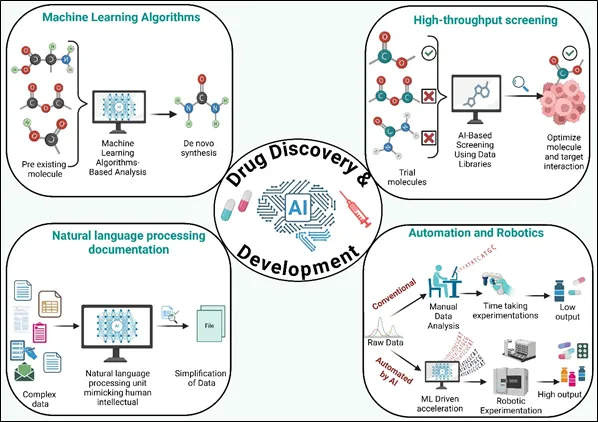
Figure-1: The combined roles of automation and artificial intelligence (AI) in drug development and discovery.
3.0 Artificial Intelligence in Personalized Healthcare:
In the conventional, one-size-fits-all method of applying evidence-based medicine from superior experimental designs, like clinical trials, individual patient variances are frequently seen as the undesirable reality that causes multiple side effects. In the modern era, healthcare data are collected from every source, like hospital records and wearable health monitoring, and used to prepare individuals' health profiles. By analyzing the nature of data, artificial intelligence (AI) uses various tools, algorithms, and data science tools to analyze massive datasets and retrieve relevant data. For instance, ML methods can classify cancer by analyzing genetic and histological data. Additionally, algorithms based on computer vision may be used to diagnose medical imaging, such as CT scans. From patient receiving to diagnosis and, finally data analysis, all these operations works with interlink with each other, that’s leads to automation with high degree of accuracy. On the other hand, with the help of Natural Language Processing (NLP) techniques, personal health information is appropriately analyzed and stored as text data, such as EHR. However, there are obstructions to analyzing this vast data, and processing the result is too difficult due to limited skilled professionals. AI can alleviate this problem. Multiple methods enable data cleansing, managing, and standardizing diverse data sources, which is critical for extracting information from the data. An example would be the autoencoders and GANs, which can fill in missing values and fix the errors in the dataset table. The speed and benefits of AI integrated health care management over conventional technique shows in figure-(2).
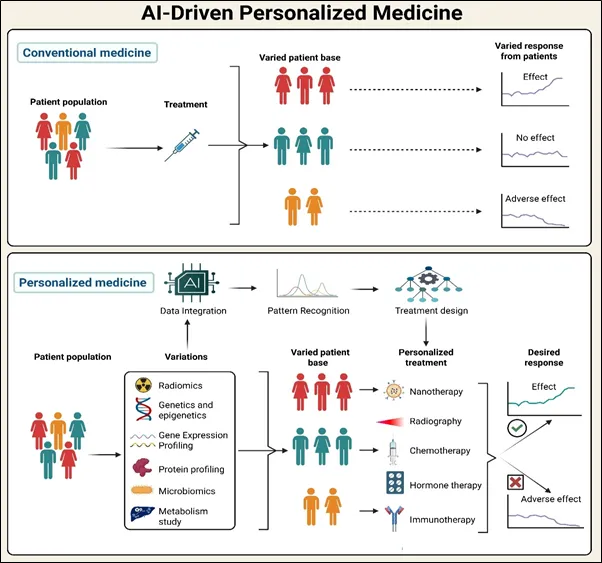
Figure-2: AI-Driven Personalized Medicine Approach
3.1 Current Landscape of AI in Modern Healthcare:
AI has been utilized in several studies for ADR prediction with the help of filtering and cleaning, feature selection, and hyperparameter tuning. In community pharmacies, a Bar code scanning, the “robotic dispensing system” with a dose recommender connected to a 3-D printer, prepares prescribed medicines with ML models. It also allows e-mails to monitor patients and use chatbots to deliver faster and more accurately than humans. In addition, an EHR algorithm (Electric health record) was introduced to detect and alert when the prescribed drug deviates from the regular pattern. The Medication event monitoring system (MEMS) is an interesting feature that checks whether the patient uses medication or not by monitoring the bottle cap sensor. However, Medication therapy management (MTM) runs a comprehensive medication management (CMM)-Wrap program in which AI detects if the patient needs extra care. The telemedicine system plays a crucial role in remote areas by virtually assisting patients and delivering essential healthcare services. Chatbot and NLP analyze symptoms, possible diagnoses, and potential ADR and give pre-assessment and post-care to patients to improve overall healthcare satisfaction.
4.0 Case studies on drug development and personalized care:
4.1 Company using AI in drug development:
Currently lots of front-line companies are adopting AI in drug development and improving the production chain. Some examples are showing in figure-(3).
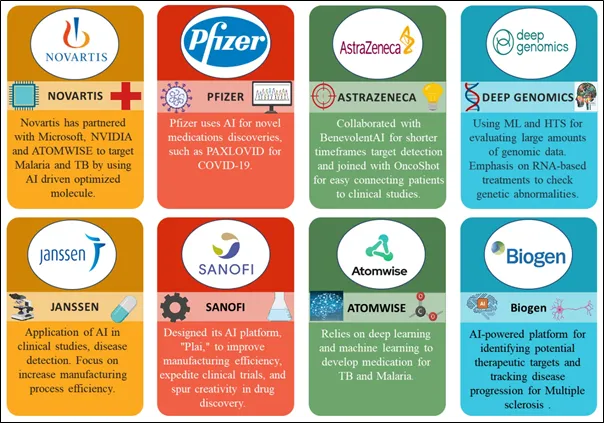
Figure-3: -Leading Pharmaceutical Companies Using AI for Drug Discovery and Development.
4.2 AI-based Medication Therapy Management at Cleveland Clinic:
Cleveland Clinic collaborated with IBM Watson Health and launched an AI-powered medication therapy management system in 2021which improved patient care and lowered drug-related issues. By analyzing patient profiles by ML, it was shocking to see a 42% decrease in medication readmission. Additionally, it shows 35% more patient adherence and 58% more potential drug interaction results. The adoption reduced costs by 2.8 million Australian dollars a year.
4.3 AI-based customized treatment:
The University of California, San Francisco (UCSF) took revolutionary steps to detect cancer by analyzing genetic alteration with the help of ML and developing a program for caring for genetically abnormal people. Similarly, the National Cancer Institute (NCI) and the National Institute of Health (NIH) used AI to manage clinical trials with AI, which minim individual clinical data.
5.0 Limitations:
As AI is a blessing for humanity, it also has significant drawbacks. Some major negative impacts of AI on society are shown in Figure-(4).
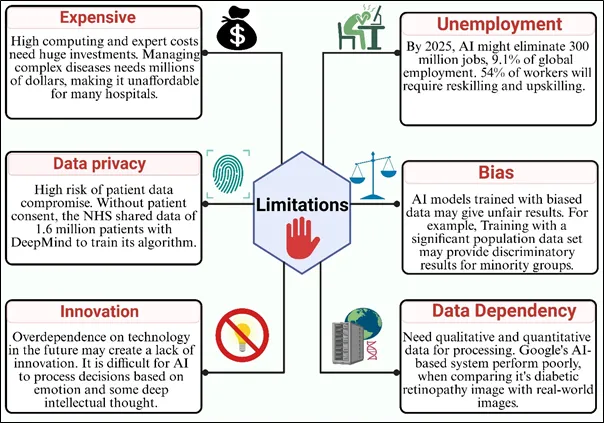
Figure-4: The major drawbacks of Artificial Intelligence.
6.0 Future prospect:
With excellence, AI is going toward the bright tomorrow in the future healthcare system. Revolutionary breakthroughs like quantum AI, high-tech machine learning, and high-accuracy data interpretation open a new field in drug development and disease targeting. Integrating AI algorithm analysis, pharmacovigilance prediction, and combining all these NLP will fortify personalized treatment strategies more accurately and effectively. The clear-cut ethical guidelines and public acceptance take AI to the driver's seat in transforming the world's healthcare system.
“From lab bench to bedside—AI is rewriting the rules of drug discovery.”
7.0 Conclusion:
The current world is dealing with data. AI thrives on it. The future of healthcare is being revolutionized by the application of artificial intelligence (AI) in individualized treatment and medication creation—the key to developing AI in healthcare is to strengthen the data and manage it accordingly. A standardized ethical rule, strict regulatory frameworks, and continued research will open up novel drug development and personalized care paths. Using it in the right hand, with the right purpose, and in the right direction may cause a blessing for humanity; otherwise, with a wrong intention, it may cause the future to tell the final story.
References:
- Khan, O., Parvez, M., Kumari, P., Parvez, S., & Ahmad, S. (2023). The future of pharmacy: How AI is revolutionizing the industry. Intelligent Pharmacy, 1(1), 32–40. https://doi.org/10.1016/j.ipha.2023.04.008
- Zhavoronkov, A., Vanhaelen, Q., & Oprea, T. I. (2020). Will Artificial Intelligence for Drug Discovery Impact Clinical Pharmacology? Clinical Pharmacology and Therapeutics, 107(4), 780–785. https://doi.org/10.1002/cpt.1795
- Hirani, R., Noruzi, K., Khuram, H., Hussaini, A. S., Aifuwa, E. I., Ely, K. E., Lewis, J. M., Gabr, A. E., Smiley, A., Tiwari, R. K., & Etienne, M. (2024). Artificial Intelligence and Healthcare: A Journey through History, Present Innovations, and Future Possibilities. Life, 14(5). https://doi.org/10.3390/life14050557
- Simpson, M. D., & Qasim, H. S. (2025). Clinical and Operational Applications of Artificial Intelligence and Machine Learning in Pharmacy: A Narrative Review of Real-World Applications. https://doi.org/10.3390/pharmacy13020041
- Allam, H. (2025). Prescribing the Future: The Role of Artificial Intelligence in Pharmacy. Information (Switzerland), 16(2). https://doi.org/10.3390/info16020131
- Jarab, A. S., Abu Heshmeh, S. R., & Al Meslamani, A. Z. (2023). Artificial intelligence (AI) in pharmacy: an overview of innovations. Journal of Medical Economics, 26(1), 1261–1265. https://doi.org/10.1080/13696998.2023.2265245
- Chalasani, S. H., Syed, J., Ramesh, M., Patil, V., & Pramod Kumar, T. M. (2023). Artificial intelligence in the field of pharmacy practice: A literature review. Exploratory Research in Clinical and Social Pharmacy, 12(October), 100346. https://doi.org/10.1016/j.rcsop.2023.100346

Saisritam Kar is a dedicated Master’s student in Pharmaceutics at the Central University of South Bihar, Gaya, and Bihar, India. His research focuses on nanoparticle-based cancer therapy and product-oriented studies on mosquito repellents. He has qualified national-level examinations such as GATE and CUET-PG, and is deeply passionate about innovative research and development in the field of pharmaceutical sciences.

Dr. Vivek Dave is currently serving as Professor and Head of the Department of Pharmacy, School of Health Sciences, at the Central University of South Bihar, Gaya, and Bihar. With over sixteen years of academic and research experience, he specializes in novel drug delivery systems and nanotechnology. Dr. Dave has published numerous research articles in reputed national and international journals.