The Upstream Process
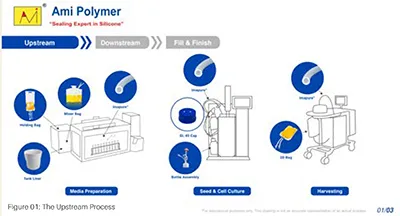
This is the foundation for vaccine production. Simply put, it involves expanding a small initial culture into a large-scale production, similar to how a single yeast starter can ferment an entire batch of bread dough. This stage begins with the development of cell lines or the selection of microorganisms, such as bacteria or viruses, which are designed to express the antigen – the key component that triggers an immune response in the human body.
Once the appropriate cell lines or microorganisms are chosen, nutrient-rich media are prepared to support their growth and proliferation. These media formulations are meticulously crafted to create optimal conditions for cell growth. The cultivation phase takes place in bioreactors, which provide a controlled environment where parameters like temperature, pH, oxygen levels, and agitation are continuously monitored and adjusted to maximize yield.
When these cells have grown sufficiently, it's time for the harvest. This means collecting the cells or the medium that contains the desired antigens. This step marks the end of the upstream process and sets the stage for the next crucial phase in vaccine production.
The Downstream Process
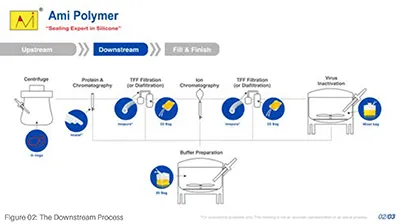
Following the harvest, the downstream process focuses on the purification and formulation of the harvested material. This stage ensures that the vaccine is both safe and effective for human use. Initially, the harvested material undergoes clarification to remove any cell debris or particulate matter, typically achieved through centrifugation or filtration.
Next, the clarified solution enters the purification phase. Here, several techniques are used such as chromatography, ultrafiltration, and diafiltration to isolate the antigen. These methods effectively strip away impurities and concentrate the antigen. For certain vaccines, an inactivation step is also performed to ensure the antigen does not cause disease, while still retaining its ability to trigger an immune response.
Finally, the purified antigen is formulated with additional components such as adjuvants, stabilizers, and preservatives. These substances boost the immune response and ensure the vaccine remains stable during storage and transportation. This careful formulation sets the stage for the final step in the vaccine production process.
The Fill-Finish Process.
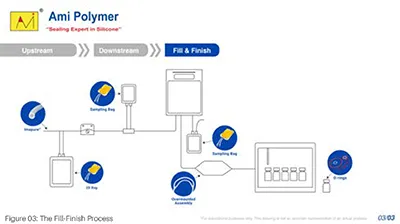
The fill-finish process is the culmination of vaccine production, where the formulated vaccine is prepared for distribution. This phase begins with aseptic filling, where the vaccine is introduced into sterile containers. Maintaining a highly controlled environment during this step is paramount to prevent contamination. Once filled, the containers are sealed to preserve sterility. This can involve capping vials or attaching needle covers to syringes. Each container then undergoes rigorous inspection to identify any defects or contaminants. Automated inspection systems are often employed to ensure high levels of accuracy and consistency.
After inspection, the containers are labelled with essential information like batch numbers, expiration dates, and usage instructions. These containers are then packaged for distribution, ensuring they stay protected and traceable throughout the supply chain. Throughout the fill-finish process, strict quality control measures are ensured. Samples from each batch undergo thorough testing to confirm they meet all safety and efficacy standards before being released for distribution.
At Ami Polymer, we understand the critical nature of each stage in the vaccine production process. Our commitment to excellence not only contributes to the success of vaccine manufacturing but also supports the broader goal of improving global health outcomes.
What makes us an exceptional partner is our proven track record in supporting large-scale production. Our collaboration with the Serum Institute of India Pvt. Ltd. in the development of COVISHIELD™, the life-saving COVID-19 vaccine, is a testament to our capabilities.
Discover our range of products:
1. Pharma Tubing: Our pharma tubing solutions, including the Imapure® and Imaweld® lines, are crafted from platinum-cured silicone to ensure purity and performance in critical applications.
2. Reinforced Hoses: Our Imavac™ and Imawrap™ hoses are engineered for high-pressure applications, featuring reinforcement with SS 316 helical wire and polyester fabric. These hoses provide unmatched reliability for CIP, WFI transfer, and other high-stress environments, ensuring safety and efficiency.
3. Single-Use Systems: Ami Polymer’s single-use bags and assemblies, are designed to streamline bioprocessing workflows. These systems are biopharmaceutical grade, autoclavable, gamma sterilize-able, and compatible with various bioprocess connectors, making them perfect for aseptic filling, filtration, and fluid management
4. Medical Products: Our medical product range includes silicone tips and Scarel buckles, designed to meet the highest standards of medical safety and performance, ensuring reliability in critical healthcare applications.
Ami Polymer – We excel in biopharmaceutical manufacturing with these strengths:
• State-of-the-Art Manufacturing Plant: Spanning 250,000 sq. ft., including 60,000 sq. ft. of ISO Class 7 & 8 Cleanrooms.
• Workforce: Supported by a team of 600+ employees.
• Advanced Capabilities: Laser-controlled extrusion, automated hose production, thermoplastic extrusion lines, automatic hydraulic presses for elastomers and polymeric components, and in-house tooling and mold-making machinery.
• Certifications: FDA 21 CFR 177.2600, USP Class VI, ISO 10993, NSF-51, BPOG Extractable Studies, RoHS Compliance, TSE/BSE Free, and Phthalate Free.
Join us in revolutionizing the future of healthcare with cutting-edge technology and unparalleled dedication!
Visit our website at www.amipolymer.com or contact us to learn more at khushi.g@amipolymer.com.